

GLOW Research Peptide Blend: Comprehensive Research Guide
GLOW research peptide blend combines the catalog-listed components BPC-157 10mg, GHK-Cu 50mg and TB-500 10mg. This guide explains component identity, experimental comparisons and analytical quality considerations for qualified laboratory researchers. The nominal composition is a 1:5:1 mass ratio. It does not establish an equal molar ratio, biological potency or a validated combination effect.
For laboratory research use only. Not for human or veterinary use, diagnosis, treatment or cosmetic application. Individual-component studies provide context for designing experiments, but they do not demonstrate the effectiveness or safety of this specific commercial mixture. GLOW is a catalog name rather than a unique chemical substance with a single molecular formula.
Composition and molecular identity
| Property | Research information |
|---|---|
| Product | GLOW: BPC-157 10mg + GHK-Cu 50mg + TB-500 10mg |
| Nominal total | 70mg of listed components; verify actual content and calculation basis on the lot certificate |
| BPC-157 | 15-residue peptide; reference sequence GEPPPGKPADDAGLV |
| GHK-Cu | Copper complex of glycyl-L-histidyl-L-lysine; copper stoichiometry and supplied chemical form require documentation |
| TB-500 | Exact sequence and terminal modifications must be confirmed; the name alone does not distinguish a thymosin beta-4 fragment from full-length material |
| Purity | Lot-specific, component-specific analytical result; no fixed percentage is asserted here |
| Appearance | Follow the lot specification; color does not establish identity, purity or activity |
| Solubility and stability | Matrix-dependent properties requiring experimental verification |
| Storage | Follow the current lot label, certificate of analysis and safety data sheet |
BPC-157 is investigated as a synthetic pentadecapeptide. Its sequence must be distinguished from deletion products, related peptides and degradation products using appropriate chemical evidence. An observed cellular response cannot establish the identity of a sample. Sequence documentation and intact-mass measurements should precede functional interpretation.
GHK-Cu introduces metal coordination into an otherwise peptide-based mixture. Total copper, free copper, uncomplexed GHK and copper-bound species are different analytical quantities. A blue appearance may be consistent with copper-containing material, but it cannot prove that the intended complex remains intact. Buffer composition, competing ligands and pH can influence speciation, so analytical conditions should be reported with any copper result.
The TB-500 label deserves particular attention. FDA discusses a thymosin beta-4 fragment with the sequence LKKTETQ under this name. Full-length thymosin beta-4 has a different sequence and molecular size. Studies of the complete protein cannot automatically establish the activity of a fragment. Until lot-specific structural evidence resolves the supplied material, a single formula or molecular weight for this component would imply unjustified precision.
Mechanistic questions for research
1. Cell migration
Migration assays offer one way to examine cellular responses associated with peptide research. Scratch closure, however, can reflect both migration and proliferation. Researchers should include viability measurements and an independent proliferation assessment. Full-length thymosin beta-4 literature provides background on migration and actin-related biology, but the exact TB-500 material in the experiment must be identified before applying that background.
2. Extracellular matrix turnover
GHK-related research has examined tissue-remodeling processes. For a mixture experiment, useful endpoints may include extracellular matrix deposition and degradation measured separately. Increased expression of a collagen-associated transcript does not establish improved tissue organization or mechanical function. A time course, protein measurements and appropriate structural endpoints strengthen interpretation.
3. Endothelial responses
Angiogenesis-related findings appear in component literature. Laboratory endpoints such as endothelial migration or network formation address limited aspects of that process. Network appearance in a culture matrix is not evidence of functional blood vessels or clinical wound healing. Cell number, matrix batch and image-analysis rules should be controlled when comparing test articles.
4. Inflammatory signaling
Cytokine measurements can help characterize responses in a defined model. They are sensitive to cell viability, endotoxin contamination and assay interference. A lower cytokine signal could result from cell loss rather than a specific pathway effect. Include appropriate stimulation controls, viability controls and contamination assessments before assigning a mechanism.
5. Copper coordination and redox conditions
The copper-containing component requires controls beyond peptide-only comparisons. Free copper and uncomplexed GHK controls can help distinguish ligand-associated responses from effects of available metal. Redox-sensitive probes should also be checked for direct chemical interference. Different media may change copper availability and therefore change an experimental response without changing the nominal amount added.
6. Combination effects
Complementary hypotheses do not prove synergy. A three-component study needs vehicle, individual components, pairwise combinations and the complete blend to separate their contributions. Prespecify an additivity model and examine multiple concentrations or ratios where appropriate. Report confidence intervals and null results alongside positive findings rather than describing every larger signal as synergy.
7. Stability during the experiment
Nominal starting composition may differ from the composition present when an endpoint is measured. Adsorption, degradation and changes in metal coordination can alter exposure. Analyze samples from relevant points in the experimental interval. Compare the mixture with separately maintained components to identify changes associated with co-formulation.
Research applications and evidence boundaries
Component comparison: The clearest use of a defined blend is comparison against its constituent materials under matched conditions. Record the actual concentration of each component and maintain the same vehicle across groups. A total-mass comparison can obscure unequal molar exposure, especially when a short copper-binding tripeptide is compared with a longer peptide.
Cell and matrix models: Fibroblast, epithelial or endothelial models may address selected questions about migration, matrix turnover or signaling. Model choice should follow the hypothesis. Findings from one cell type should not be presented as evidence of whole-body regeneration, improved appearance or recovery from injury.
Analytical method development: GLOW presents a challenging mixture for separation and quantification. Different detector responses, metal dissociation and co-eluting impurities can complicate interpretation. Method development should demonstrate recovery and specificity for each component, including the resolved identity of the TB-500 material.
Compatibility research: A three-component formulation can be examined for changes in recovery, speciation and degradation relative to its individual components. Container effects and sample preparation can influence results. A compatible analytical matrix is not automatically a stable storage formulation.
Evidence assessment: Published studies involving BPC-157, GHK-Cu or full-length thymosin beta-4 should be evaluated separately. Differences in chemical identity, formulation, species and endpoints determine whether a paper is relevant. None of the references below establishes clinical benefit for this exact 10mg/50mg/10mg GLOW product.
Quality assurance and documentation
Request the current lot certificate of analysis and review the methods behind each result. A useful certificate identifies the batch, chemical forms, specifications, test dates and calculation basis. Marketing descriptions cannot substitute for traceable analytical data. The presence of a certificate alone does not establish that all relevant tests were performed.
- Identity: Confirm each peptide using intact mass and suitable sequence-supporting evidence. Resolve the TB-500 sequence and terminal modifications explicitly.
- Content: Quantify each component with appropriate standards. State whether results are expressed as supplied material, free peptide equivalent or another defined basis.
- Purity: Report chromatographic area results with method details. Area purity is distinct from peptide content and cannot alone verify a mass ratio.
- Copper: Distinguish total elemental copper from evidence of the intended GHK complex. Use methods suited to the analytical question.
- Related substances: Assess relevant degradation products, residuals and aggregates using methods suitable for the supplied formulation.
- Biological assays: Validate specificity and interference controls. Functional results supplement chemical characterization rather than replacing it.
Release criteria should reflect the intended laboratory application. Contaminants that have little effect on one analytical method may strongly affect cell-based measurements. Maintain lot traceability throughout preparation, testing and data analysis, and investigate unexpected results before pooling data across batches.
Laboratory handling and storage
Use trained personnel, appropriate protective equipment and the laboratory’s chemical-handling procedures. Follow current lot documentation for storage and record temperature excursions, opening dates and container history. No universal shelf life or fixed solution-storage period is assigned here because stability depends on the actual material and conditions.
Analytical preparation should follow an approved, matrix-specific laboratory procedure. Document the solvent system, pH, concentration basis, container and elapsed time. Establish recovery and stability for all components, including copper speciation when relevant. Visible clarity or color cannot establish chemical integrity, sterility or biological activity. This page supplies no personal-use preparation or administration protocol.
Frequently asked questions
1. What is GLOW research peptide blend?
GLOW is the catalog name for a mixture labeled BPC-157 10mg, GHK-Cu 50mg and TB-500 10mg. These are nominal component amounts. Each ingredient requires its own identity and content assessment, and the mixture has no single molecular formula.
2. Does the 1:5:1 ratio demonstrate synergy?
No. It describes labeled mass proportions. Synergy requires a defined experimental model, single-component and pairwise controls, and quantitative comparison with an expected additive response. A formulation ratio by itself provides none of that evidence.
3. Is TB-500 identical to full-length thymosin beta-4?
The name is insufficient to decide. FDA identifies a fragment under the TB-500 name, while some commercial descriptions use the name for other thymosin-related materials. Confirm sequence, length and terminal modifications on the lot documentation and through analytical testing.
4. Does blue color prove GHK-Cu quality?
No. Color is an observation, not a release test. Copper-containing species can differ in their coordination and availability. Identity, copper content, purity and stability need appropriate analytical evidence even when a sample looks typical.
5. What evidence supports use of the complete blend?
The cited literature supplies background on individual components or related molecules. It does not validate this exact product’s effectiveness, safety or superiority. Researchers should distinguish a testable combination hypothesis from an established result and report the material actually studied.
6. What dose or preparation schedule is recommended?
No human or veterinary dose is recommended. This product is restricted to laboratory research. Experimental conditions should be established through authorized institutional protocols and suitable chemical characterization; catalog amounts are not administration instructions.
7. How should quality and shelf life be checked?
Review the current lot label, certificate and safety data sheet. Verify that storage claims are supported for the supplied formulation. Reassess material after relevant excursions using a stability-indicating method rather than assigning shelf life from another peptide’s documentation.
Related research products
- KLOW — a separately defined multi-component blend.
- BPC-157 — single-component comparison.
- GHK-Cu — copper-peptide research material.
- TB500 — verify exact sequence before comparison.
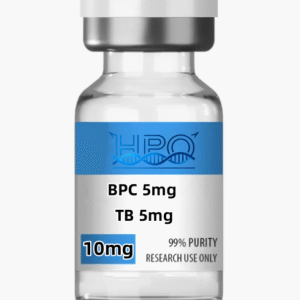
- BPC + TB — a distinct two-component formulation.
- Epithalon — separate short-peptide research literature.
- KPV — tripeptide research material.
- CJC-1295 no DAC + Ipamorelin — a separate endocrine research blend.
Scientific references
- Emerging Use of BPC-157 in Orthopaedic Sports Medicine: A Systematic Review — evidence overview, primarily preclinical.
- The human tri-peptide GHK and tissue remodeling — background on GHK and copper coordination.
- Thymosin beta4 and angiogenesis: modes of action and therapeutic potential — full-length thymosin beta-4 context.
- FDA: Certain bulk drug substances that may present significant safety risks — characterization and safety limitations for relevant substances.
Research-use statement
GLOW is supplied for laboratory research only. No FDA-approved indication is represented for this blend. It is not intended for human or veterinary consumption, diagnosis or treatment. Qualified researchers are responsible for lawful procurement, institutional authorization, safe handling, test-article verification and appropriate disposal. Component literature should not be interpreted as a claim that this product treats disease or produces cosmetic, athletic or anti-aging benefits.
Reviews
There are no reviews yet.